
YFFB vs. RVV: Which Cable is Right for Gantry Cranes?
The choice of gantry crane cables directly impacts operational safety and equipment lifespan. This article provides an in-depth comparison of the key differences between YFFB flat cables and RVV round cables in terms of bending radius, tensile strength, and space management. As a professional provider of crane cable solutions, we will explain why YFFB is the optimal choice for port and heavy-duty industrial applications, helping you reduce maintenance costs and minimize the risk of downtime.
CRANE & HOIST CABLESCABLE BUYING GUIDES
4/27/20262 min read
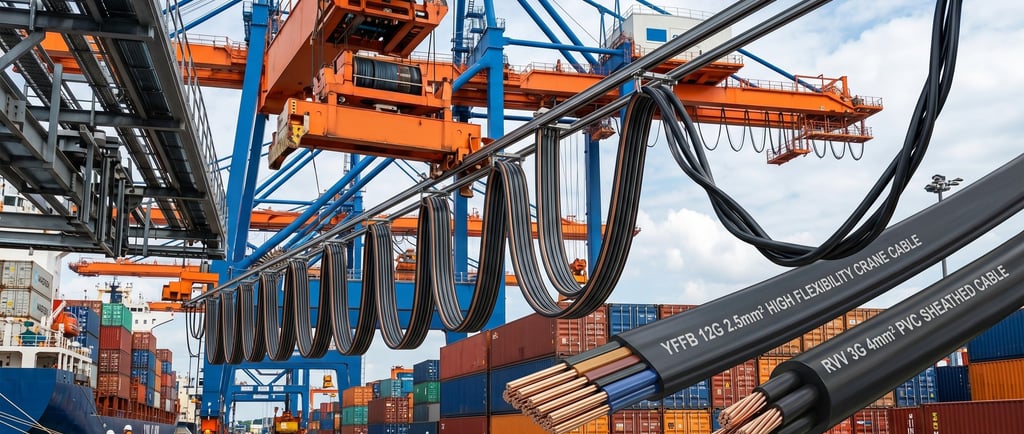
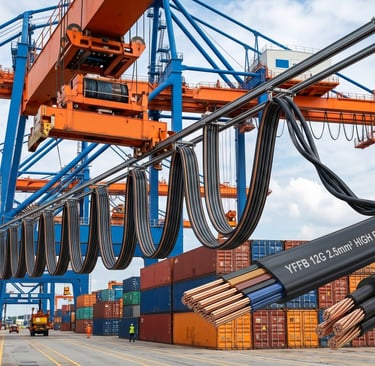
In the world of industrial material handling, selecting the right wiring system isn't just a technical detail—it’s a critical decision that impacts operational safety and long-term costs. For gantry cranes, the debate often boils down to two popular options: YFFB (Flat Flexible Cable) and RVV (Round PVC Sheathed Cable).
As a leading crane cable solution provider, we understand that choosing the wrong cable can lead to frequent downtime, premature wear, and even safety hazards. In this guide, we’ll break down the differences to help you make an informed choice.
Understanding the Basics: What are YFFB and RVV?
Before diving into the comparison, let's define our contenders.
RVV Cables: These are standard round, PVC-insulated cables. They are versatile, cost-effective, and widely used in general electrical installations and light-duty mobile equipment.
YFFB Cables: Specifically designed for movement, YFFB is a flat flexible cable featuring reinforced tensile elements. Its flat structure is engineered to withstand constant bending and rolling in one plane.
Key Differences for Gantry Crane Applications
1. Flexibility and Bending Radius
Gantry cranes require cables that can endure thousands of cycles of movement. YFFB cables excel here. Their flat design allows for a much smaller bending radius compared to round cables. Because the cores are laid out side-by-side, the stress during bending is distributed evenly, preventing the internal friction that often plagues round cables in high-motion environments.
2. Space Efficiency and Management
In a gantry crane setup, cables are often housed in festive systems or cable tracks. The flat profile of the YFFB cable allows multiple cables to be stacked neatly, saving significant space. Conversely, RVV cables, being round, tend to twist or "corkscrew" when subjected to repetitive lateral movement, leading to tangles and mechanical failure.
3. Tensile Strength and Durability
Gantry cranes often operate outdoors in ports or heavy industrial yards. YFFB cables are typically manufactured with integrated steel wires or Kevlar fibers to handle the mechanical tension of long-travel distances. While RVV is durable for stationary or low-impact use, it lacks the specialized reinforcement required for the high-speed, heavy-load demands of a crane.
Comparison Table: YFFB vs. RVV
FeatureYFFB (Flat Cable)RVV (Round Cable)ShapeFlat / RectangularRoundMovement TypeFrequent Bending (Single Plane)Static or Occasional MovementBending RadiusVery Small (Highly Flexible)LargerTwisting RiskLow (Anti-torsion)High (Prone to twisting)Best ForGantry Cranes, Festoon SystemsGeneral Wiring, Power Supply
Why Choosing the Right Cable Matters for Your Bottom Line
Using a standard RVV cable where a specialized YFFB cable is required might save money upfront, but it often leads to:
Frequent Replacements: Round cables wear out faster under constant motion.
Increased Downtime: Every hour a crane is offline for cable repair is lost revenue.
Safety Risks: Cable fatigue can lead to short circuits or mechanical snags.
As a dedicated crane cable solution provider, we recommend YFFB for almost all gantry crane applications, especially those involving festoon systems or vertical lifts.
How to Select Your Crane Cable Solution
When evaluating your options, consider the following factors:
Travel Distance: Longer distances require higher tensile strength.
Environmental Conditions: Does the cable need to be oil-resistant, UV-resistant, or cold-resistant?
Voltage Requirements: Ensure the cable's insulation rating matches your power supply.
Conclusion: The Professional Verdict
While RVV cables have their place in general industry, the specialized demands of gantry cranes make YFFB the superior choice. Its flat geometry, superior flexibility, and enhanced tensile strength ensure that your machinery operates smoothly and safely.
Partnering with a professional crane cable solution provider ensures you get cables manufactured to international standards (like CE and IEC), tailored to your specific industrial environment.
Looking for a reliable crane cable solution?
Contact our technical team today for a customized quote and expert advice on the best cabling for your port or factory operations.