
How to Choose High-Performance Elevator Cables | Buyer's Guide
Looking for reliable elevator traveling cables? Read our expert guide on selecting high-performance cables for speed, height, and smart data transmission.
ELEVATOR CABLESCABLE BUYING GUIDES
5/30/20263 min read
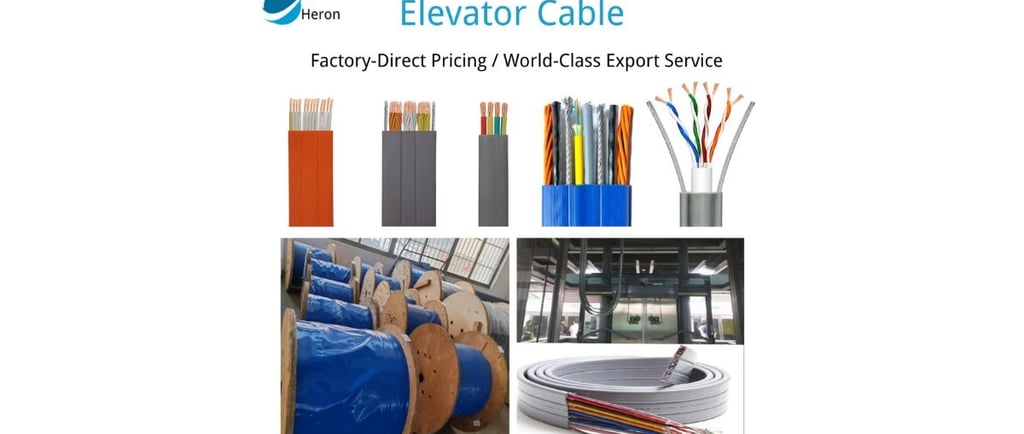
Elevators are the lifelines of modern multi-story buildings, operating continuously under intense physical stress. At the heart of this vertical mobility are elevator cables—specifically accompanying or traveling cables—which supply continuous power and clear data transmission while traveling up and down thousands of times a day.
Choosing the wrong cable doesn’t just cause operational downtime; it introduces severe safety hazards. For building managers, engineers, and procurement specialists, partnering with a certified elevator cable manufacturer and knowing exactly what technical specifications to look for is critical.
Here is your comprehensive guide to selecting high-performance elevator cables that guarantee safety, longevity, and efficiency.
1. Understand Your Structural and Speed Requirements
Not all elevators are built equal, and neither are their cables. The first step in selection involves evaluating the physical demands of your specific elevator system.
Travel Height and Suspended Length: For low-to-medium rise buildings, standard flexible PVC-insulated cables work beautifully. However, high-rise buildings create massive tensile loads due to the weight of the long, suspended cable itself.
Rated Speed: High-speed elevators (traveling above 4 m/s) generate intense vibrations and aerodynamic forces. Standard cables will sway violently, leading to structural damage. High-speed systems require specialized aerodynamic profiles and internal balancing elements to prevent distortion.
2. Evaluate the Internal Support Elements (The Backbone)
A high-performance cable relies entirely on its core support to withstand constant bending and gravitational pull. When sourcing from a reputable elevator cable manufacturer, you will generally choose between two primary supporting elements:
Steel Core (Aviation Steel Wire): Ideal for high-rise applications and heavy-duty freight elevators. The steel wire bears the structural tension, preventing the copper conductors from stretching or breaking under their own weight.
Hemp/Textile Core: Best suited for low-to-medium travel heights and lower speeds. It provides excellent flexibility and dampens internal friction as the cable bends over the loop.
3. Prioritize Materials Built for Millions of Flexing Cycles
An elevator cable is subjected to continuous dynamic flexing. Material science determines whether your cable lasts two years or twenty.
The Insulation and Jacket: High-performance cables utilize specially formulated, lead-free PVC or polyurethane (PUR) compounds. These materials must remain highly flexible across a wide temperature range, resist oil, moisture, and ozone, and feature excellent flame-retardant properties to prevent fire propagation up the elevator shaft.
Copper Quality: Look for finely stranded, oxygen-free bare copper conductors. Finer strands allow the copper to bend repeatedly without experiencing metal fatigue or micro-cracking.
4. Don’t Overlook Shielding and Data Transmission
Modern elevators are no longer just mechanical boxes; they are smart systems equipped with CCTV cameras, intercoms, access controls, and IoT monitoring sensors.
Because these data lines run parallel to high-voltage power lines inside the same traveling cable, electromagnetic interference (EMI) is a major issue. High-performance cables must feature optimized copper braiding or aluminum foil shielding around the data pairs (like Cat6 or coaxial elements). This ensures crystal-clear video feeds and uninterrupted communication data, completely isolated from power surges.
5. Match the Cable to Environmental Conditions
The environmental conditions of your elevator shaft dictate the ruggedness your cable requires:
• Extreme cold / unheated shafts: Cold-resistant PVC or PUR jackets rated down to -40°C.
• Humid / coastal climates: Anti-corrosive copper strands and moisture-resistant insulation.
• Industrial / oil-heavy shafts: Oil-resistant jackets to prevent chemical swelling and cracking.
Conclusion: Partner with a Certified Elevator Cable Manufacturer
Ultimately, the most effective way to ensure elevator safety and minimize costly maintenance is to source your cables directly from a specialized elevator cable manufacturer. Look for partners who carry global certifications (such as CE, UL, or VDE) and offer rigorous dynamic flex testing in their quality control labs.
Investing in premium, high-performance elevator cables upfront saves thousands of dollars in emergency repairs, downtime, and early replacement costs down the line.
Why Choose Us?
As a leading global elevator cable manufacturer, we design and engineer custom traveling cables optimized for high speeds, extreme heights, and smart building integration. Contact our engineering team today for a free technical consultation and quotation for your next project.